When a child needs dental treatment, parents naturally ask one question first: Is it safe? Add the word “laser” to the conversation, and the question becomes even more understandable. Lasers sound futuristic, but dental lasers have been used as clinical tools for years.
The American Academy of Pediatric Dentistry (AAPD) recognizes lasers as an alternative or complementary method for certain soft- and hard-tissue dental procedures in infants, children, and adolescents. It also emphasizes that dental professionals should receive appropriate education and hands-on training before using lasers on pediatric patients.
So, is laser dentistry in Carlisle safe for kids? In the right clinical setting, with the right equipment, training, and safety precautions, laser treatment can be an appropriate option for some children. It does not mean every child needs laser treatment, though. The procedure should always match the child’s specific dental needs.
What Is Laser Dentistry for Children?
Laser dentistry uses concentrated light energy to interact with specific areas of the mouth. Depending on the laser wavelength and procedure, a dental professional can use it on soft tissue, hard tissue, or both.
The Food and Drug Administration (FDA) explains that medical lasers use precisely focused light and have applications in several medical fields, including dentistry. Dental applications can include procedures involving oral surgery and periodontal tissues.
For children, dental lasers may have several applications. The AAPD lists procedures such as selected soft-tissue treatments, frenectomy, gingival procedures, oral lesion treatment, cavity preparation, and caries removal among potential uses.
That does not mean every child needs laser treatment. A dentist should first diagnose the problem and then decide whether a laser offers a practical benefit over conventional treatment.
Is Laser Dentistry in Carlisle Safe for Kids?
For appropriately selected pediatric patients, laser dentistry can be performed safely by trained dental professionals.
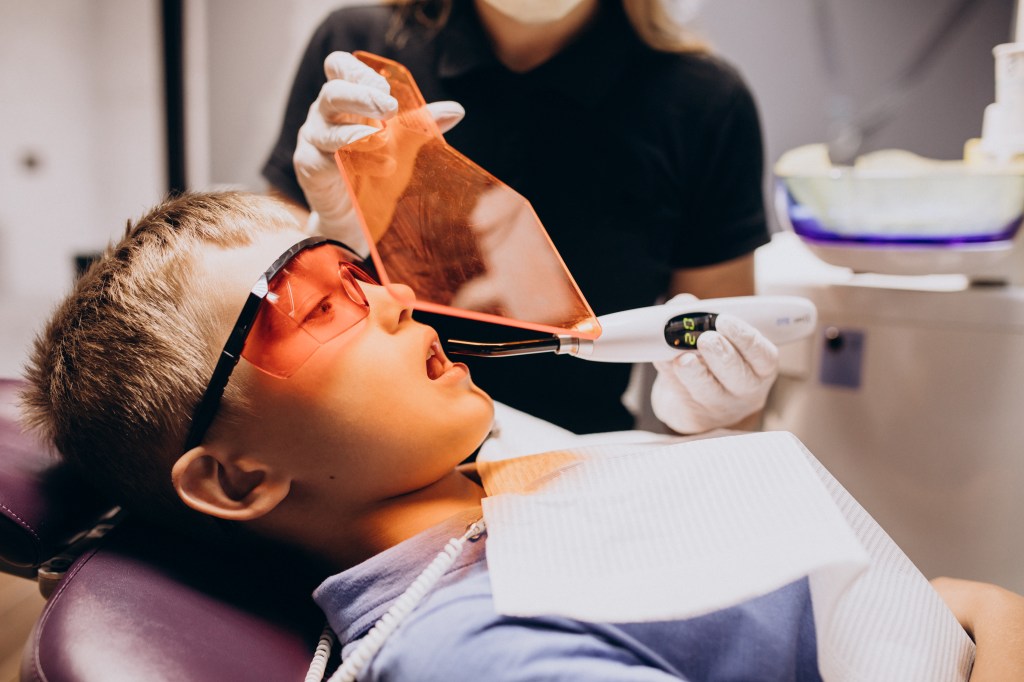
The AAPD recommends that dental professionals receive additional education and hands-on training before using lasers on pediatric patients. It also recommends wavelength-specific protective eyewear for the patient, dental team, and observers during laser procedures.
Safety also depends on the type of laser and the procedure being performed. A laser designed for one clinical purpose may not be appropriate for another. The AAPD specifically encourages professionals to choose the laser that fits the indicated procedure.
The FDA also notes that lasers can provide precise tissue treatment but can cause injury when used improperly. Potential risks associated with laser surgery include pain, infection, bleeding, scarring, and incomplete treatment.
In other words, the laser itself is not the whole story. Training, judgment, equipment, and safety procedures all matter.
Why Might a Child Need Laser Dental Treatment?
Parents sometimes assume laser dentistry exists mainly to make dental visits more comfortable. Comfort can be one consideration, but pediatric lasers have several possible clinical applications.
1. Soft-Tissue Procedures
Some children have soft-tissue concerns that require treatment. For example, a dentist may recommend a frenectomy when the tissue connecting the lip or tongue to surrounding structures creates a specific clinical concern.
The AAPD recognizes frenectomy, gingivectomy, gingival contouring, and selected treatment of oral lesions as possible pediatric laser applications.
A laser may provide a useful way to manage selected soft tissues. However, the dentist still needs to determine whether treatment is necessary in the first place.
2. Selected Cavity Treatments
Some dental lasers can work with hard tissue and may assist with selected cavity preparation or caries removal.
That does not mean lasers replace dental drills for every cavity. Different lasers have different capabilities, and conventional instruments may still play a role in treatment.
A trained dentist should explain why a particular approach makes sense for the child’s tooth rather than presenting laser treatment as automatically superior.
3. Gum-Related Treatment
Lasers can also have applications involving gum and periodontal tissues.
The AAPD recognizes selected periodontal and soft-tissue applications for pediatric patients.
If a child has unusual gum tissue, inflammation, or another diagnosed concern, the dentist can determine whether laser treatment belongs in the treatment plan.
Can Laser Treatment Make Dental Visits More Comfortable?
This is one area where parents should separate realistic benefits from marketing promises.
Certain laser procedures may reduce vibration or the need for some conventional instruments. The AAPD notes that some laser applications can reduce the vibratory effects associated with conventional high-speed handpieces during selected hard-tissue procedures.
That may matter for children who feel anxious about the sound or sensation of a traditional dental handpiece.
However, “less uncomfortable” does not mean “guaranteed painless.” Every child reacts differently, and the procedure itself matters.
Parents looking for a pain free dentist in Carlisle should therefore ask how the dental team manages discomfort rather than relying on a simple label. A trustworthy provider will explain whether local anesthesia, topical anesthesia, behavioral techniques, or other comfort measures may be appropriate.
Interesting Reads : Laser Dentistry vs Traditional: Painless Treatment Comparison
What Safety Measures Should a Pediatric Dental Office Follow?
Laser treatment requires specific safety practices.
The AAPD recommends wavelength-specific protective eyewear for the patient, dental team, and observers. It also supports appropriate infection-control practices and the use of a laser safety officer in facilities that use dental lasers.
Parents can look for a dental office that:
- Uses appropriate protective eyewear.
- Has trained professionals operating the equipment.
- Selects the laser according to the procedure.
- Follows infection-control procedures.
- Explains the treatment before beginning.
- Reviews the child’s medical and dental history.
- Provides clear aftercare instructions.
These precautions are not unnecessary extras. The FDA explains that laser exposure must be properly managed because higher-powered lasers can cause serious injury when used incorrectly.
A good pediatric dental experience should combine modern technology with careful clinical judgment.
What Should Parents Ask Before Choosing Laser Treatment?
Before agreeing to a laser procedure, parents should feel comfortable asking questions. You do not need a dental degree to understand your child’s treatment plan.
Consider asking:
- Why does my child need this procedure?
Ask what dental problem the treatment will address. - Why are you recommending a laser?
The dentist should explain what advantage the selected laser offers for your child’s specific situation. - What type of laser will you use?
Different lasers have different applications. - What are the alternatives?
Conventional treatment may be appropriate in some cases. - Will my child need anesthesia?
The answer depends on the procedure and your child’s individual needs. - What should we expect afterward?
Ask about eating, brushing, discomfort, healing, and follow-up care.
A good children dentist in Carlisle should welcome these questions. Clear communication helps parents make informed decisions instead of choosing a treatment simply because the technology sounds advanced.
Common Myths About Laser Dentistry for Children
Myth 1: Lasers Are Too Dangerous for Kids
Truth: The AAPD recognizes appropriate laser use for pediatric dental patients. It also emphasizes professional training and safety measures.
Myth 2: Every Laser Procedure Is Completely Pain-Free
Truth: Some procedures may be more comfortable with laser technology, but pain and anesthesia needs depend on the treatment and the child.
Myth 3: Laser Dentistry Replaces All Traditional Dental Tools
Truth: Lasers do not replace every dental instrument. Some procedures may use a laser alone, while others may combine laser technology with conventional techniques.
Myth 4: Newer Technology Automatically Means Better Treatment
Truth: Technology is useful when it solves a specific clinical problem. The best treatment depends on the child’s diagnosis, needs, and circumstances.
How Can Parents Prepare Children for Laser Dental Treatment?
Children often feel more comfortable when adults explain dental visits in simple, calm language.
Instead of saying, “This won’t hurt at all,” try explaining that the dentist will tell them what is happening and help them stay comfortable.
Parents can also:
- Follow the dental office’s pre-treatment instructions.
- Tell the dentist about previous difficult dental experiences.
- Bring questions to the appointment.
- Avoid using frightening words when describing treatment.
- Let the dental team explain unfamiliar equipment.
- Follow all post-treatment instructions carefully.
Parents searching for a children dentist in Carlisle should consider more than technology. Look for a provider who communicates well with children, explains treatment clearly, and creates an age-appropriate care experience.
Laser Dentistry vs. Traditional Dental Treatment
Laser dentistry and conventional dentistry should not be treated like two teams competing for a championship trophy. The goal is not to “win” with the newest technology. The goal is to provide appropriate care.
Laser treatment may offer useful benefits for selected procedures, while traditional dental instruments remain valuable for many others.
| Factor | Laser Dentistry | Traditional Dentistry |
| Main use | Selected soft- and hard-tissue procedures | Wide range of dental procedures |
| Technology | Uses focused light energy | Uses conventional dental instruments |
| Training | Requires laser-specific education | Requires standard dental training |
| Suitability | Depends on procedure and patient | Depends on procedure and patient |
| Safety | Requires laser-specific precautions | Requires standard clinical safety |
The AAPD’s position supports thoughtful laser use based on the procedure rather than using lasers simply because they are available.
Frequently Asked Questions
1. Is laser dentistry safe for young children?
Laser treatment can be appropriate for pediatric patients when a trained dental professional selects the correct equipment and procedure. The dentist should evaluate the child’s individual needs before recommending treatment.
2. Does laser dentistry always eliminate the need for anesthesia?
No. Some procedures may require little or no local anesthesia, while others may still require it. The answer depends on the treatment and the child.
3. Is laser treatment better than a traditional dental drill?
Not necessarily. Laser technology can offer advantages for certain procedures, but conventional instruments remain appropriate for many treatments.
4. How do I find a children’s dentist in Carlisle who offers laser treatment?
Ask the dental office whether it provides pediatric laser procedures and which treatments it performs with lasers. You can also ask about provider training, safety protocols, treatment alternatives, and expected recovery.
5. Can laser dentistry make dental visits easier for anxious children?
It may help in selected situations, particularly when a procedure involves less vibration or a different treatment experience. However, children’s anxiety has many causes, so good communication and age-appropriate behavior guidance remain important.
6. What should I ask a pain-free dentist in Carlisle about my child’s treatment?
Ask how the dentist plans to manage discomfort, whether anesthesia is necessary, what your child may feel during the procedure, and what recovery should be like.
Final Thoughts
Laser dentistry can be a useful tool in pediatric dental care, but it is not a universal solution. The AAPD recognizes laser applications for children while emphasizing proper training, appropriate technology, research, and safety practices.
If you are considering laser dentistry in Carlisle, begin with a professional evaluation. Ask what condition your child needs treated, why the dentist recommends a laser, what alternatives exist, and how the team will protect your child during treatment.
A qualified children dentist in Carlisle should focus on your child’s individual needs rather than simply promoting new technology. If comfort is your main concern, discuss realistic pain-management options with a pain free dentist in Carlisle before treatment begins.
Modern dental technology can make certain procedures more precise and comfortable. But the most important ingredients remain the same: accurate diagnosis, trained professionals, appropriate treatment, and careful attention to your child’s safety.
Learn More : Dental Implant Infection Symptoms: When Is Emergency Treatment Needed?


Leave a Reply