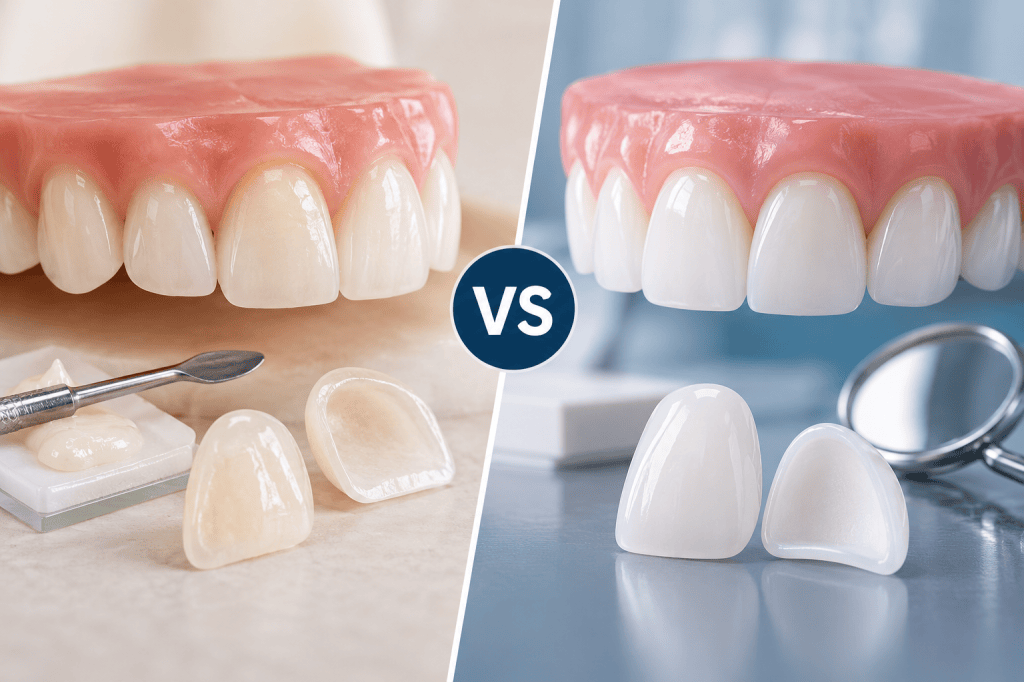
A brighter, more balanced smile can make a noticeable difference in how you feel about your appearance. If you have chipped, stained, uneven, or slightly misshapen teeth, veneers may be one cosmetic option worth discussing with a dentist.
Two common choices are composite and porcelain veneers. Although both can improve the appearance of teeth, they differ in material, treatment process, appearance, maintenance, and cost.
If you are considering composite veneers in Carlisle, understanding these differences can help you prepare better questions for your dental consultation.
What Are Dental Veneers?
Dental veneers are thin coverings placed over the front surfaces of teeth. They can help conceal certain cosmetic concerns, including discolouration, small chips, cracks, gaps and irregular tooth shapes. Veneers are usually made from either composite resin or porcelain.
Veneers improve the visible surface of a tooth, but they do not make the tooth immune to decay, gum disease or damage. You still need regular dental examinations and a consistent oral hygiene routine after treatment.
A veneer is also not the same as a crown. A crown covers most or all of a tooth, while a veneer generally covers only the visible front surface. Your dentist will recommend the most suitable treatment after assessing your enamel, gums, bite, and overall dental health.
Composite Veneers Explained
Composite veneers use tooth-coloured resin. The dentist applies the material directly to the tooth, shapes it and hardens it with a special curing light. The surface is then polished to create the desired appearance.
This treatment may require less preparation than porcelain veneers. In some cases, the dentist may preserve more natural tooth structure. However, the amount of preparation depends on the tooth, the planned result, and the dentist’s clinical judgment.
One advantage of composite treatment is that it can often be completed in fewer appointments. The dentist can also repair or reshape composite material more easily if a small area chips or wears.
Composite veneers may suit people who want a more conservative or potentially lower-cost cosmetic option. They may also suit someone who wants to improve minor imperfections without immediately choosing a more involved treatment.
However, composite resin can be more vulnerable to staining, wear and chipping than porcelain. Coffee, tea, red wine and tobacco can affect the appearance of resin over time. Good brushing habits help, but no cosmetic material stays completely unchanged forever.
If you are considering composite veneers in Carlisle, ask your dentist how much tooth preparation is required, how to maintain the material, and whether composite is suitable for your bite.
Porcelain Veneers Explained
Porcelain veneers are custom-made shells created to fit the front of the teeth. The dentist usually prepares the teeth, takes scans or impressions, and works with a dental laboratory to produce the veneers. At a later appointment, the veneers are tried in, adjusted where needed, and bonded to the teeth.
Porcelain is generally resistant to staining and can provide a smooth, natural-looking finish. It can also reproduce the appearance of natural enamel, including translucency and carefully planned colour.
Porcelain veneers may be suitable for people who want a longer-term cosmetic result and are comfortable with a more structured treatment process. The result depends on careful planning, accurate fit, appropriate bite design and good maintenance.
Porcelain treatment also has limitations. Some natural enamel may need to be removed, and many porcelain veneer treatments are not reversible. Cleveland Clinic notes that veneers may cause sensitivity, can become dislodged, and may require replacement in the future.
People searching for porcelain veneers in Carlisle should therefore ask about preparation, expected lifespan, future replacement, and how the treatment could affect their natural teeth.
Composite vs Porcelain Veneers
Both materials can improve the appearance of a smile, but they are not identical treatments.
| Factor | Composite veneers | Porcelain veneers |
| Factor | Composite veneers | Porcelain veneers |
| Material | Tooth-coloured composite resin | Dental porcelain or ceramic |
| Treatment process | Often applied directly to the tooth | Usually made to fit by a laboratory |
| Appointment time | May be completed more quickly | Usually requires planning and more than one visit |
| Repairs | Small repairs may be easier | Repairs can be more complex |
| Stain resistance | Can stain or lose polish over time | Generally more resistant to staining |
| Tooth preparation | May require limited preparation in some cases | Often involves removal of some enamel |
| Reversibility | Depends on preparation and treatment | Frequently considered irreversible |
| Best choice | May suit minor changes or a conservative approach | May suit people seeking a durable, highly planned cosmetic result |
This table provides general information rather than a treatment recommendation. The right option depends on your individual dental condition.
Which Veneers Last Longer?
Porcelain veneers are often selected for their strength and stain resistance, but they can still chip, crack, or come loose. Composite veneers may be more likely to need polishing, repair or replacement as they age.
The lifespan of either option depends on several factors:
- The quality of the initial treatment.
- Your bite and whether you grind your teeth.
- Your daily brushing and interdental cleaning.
- Whether you bite hard objects or use your teeth as tools.
- Your diet and exposure to staining substances.
- The health of the teeth and gums underneath and around the veneers.
- Regular dental check-ups and professional cleaning.
It is not accurate to promise that veneers will last for a specific number of years for every patient. Your dentist can give a more realistic estimate after examining your teeth and discussing your habits.
Veneers also require replacement eventually in many cases. Replacement treatment may involve additional cost and may require further changes to the tooth.
Interesting Read: The 5 Types of Dental Implants Explained: Single Tooth, All-on-4, Mini & More
Are Veneers Right for Everyone?
Veneers may not be suitable if you have untreated tooth decay, active gum disease, insufficient enamel, or a bite that places excessive pressure on the front teeth. Bruxism, or teeth grinding, can increase the risk of chipping or loosening cosmetic restorations.
Your dentist may recommend treating oral-health problems before discussing veneers. They may also suggest alternatives, such as composite bonding, tooth whitening, orthodontic treatment or crowns, depending on the problem.
Whitening may be suitable when the main concern is tooth colour and the tooth structure is otherwise healthy. Orthodontic treatment may be more appropriate when crowding or spacing affects the position of several teeth.
A good cosmetic treatment should solve the right problem. Putting a veneer on a tooth that needs restorative or preventive care first is a little like painting a damp wall: the surface may look better temporarily, but the underlying issue remains.
How to Care for Veneers
Veneers need the same basic care as natural teeth. Cleveland Clinic recommends brushing with a soft-bristled toothbrush and non-abrasive fluoride toothpaste, flossing daily and attending routine dental appointments.
For better long-term maintenance:
- Brush twice daily, including before bed.
- Clean between your teeth every day.
- Avoid using your teeth to open packets or bite hard objects.
- Tell your dentist if you grind or clench your teeth.
- Ask whether a night guard is appropriate.
- Avoid abrasive whitening products unless your dentist recommends them.
- Contact your dentist if a veneer feels loose, sharp or uncomfortable.
Veneers do not protect the gum line from plaque. Plaque can still collect around the edges, and decay can develop on the natural tooth if oral hygiene is poor.
If you have veneers, do not ignore bleeding gums, persistent sensitivity, bad breath or changes in the way your teeth meet. These signs may need professional assessment.
What About Cost?
Cost varies based on several factors.
The number of teeth being treated, material, preparation, laboratory work, dentist experience, and complexity of treatment can all influence the final price.
In general, porcelain veneers tend to cost more than composite veneers. The ADA specifically identifies porcelain veneers as the more expensive option.
However, the lowest initial price should not automatically determine your choice.
Think about the complete treatment rather than one number. Ask about maintenance, potential repairs, replacement, and what the quoted fee includes.
Your dentist can provide a personalized estimate after examining your teeth.
Can Veneers Be Repaired?
Damage does not always mean that a veneer must immediately be replaced.
Composite material can sometimes be repaired directly, depending on the location and extent of the damage.
Porcelain restorations may require a different approach if they chip or fracture.
The correct solution depends on the individual restoration. A dentist should examine the damaged area before deciding whether repair or replacement makes sense.
This is another reason to avoid treating online comparisons as a final treatment plan.
Are Veneers Permanent?
Veneers are designed to provide long-term cosmetic improvement, but they are not permanent for life.
The American Dental Association notes that veneer treatment may involve removal of some enamel and is not reversible.
That makes the initial planning process important.
Before choosing Veneers in Carlisle, discuss how much tooth preparation your treatment will require and what your options would be if a veneer eventually needs replacement.
Understanding the long-term commitment can help you make a more informed decision.
Veneers: Truth vs Myths
Myth: Veneers last forever
Truth: Veneers can chip, loosen, or need replacement. Their lifespan depends on your bite, oral hygiene, and daily habits.
Myth: Veneers never affect natural teeth
Truth: Some treatments require enamel preparation and may cause sensitivity. Ask your dentist how much tooth structure will be removed.
Myth: Composite and porcelain veneers are the same
Truth: Composite resin is applied directly to the tooth, while porcelain veneers are custom-made. They differ in appearance, durability, care, and cost.
Myth: Veneers fix every dental problem
Truth: Veneers mainly improve cosmetic concerns. Tooth decay, gum disease and significant bite problems may need separate treatment.
Myth: Anyone can apply veneers
Truth: Veneers should be provided by a qualified dentist. Unlicensed treatment may increase the risk of infection, nerve damage, and poor results.
Myth: Veneers prevent cavities
Truth: Natural teeth can still decay around or under veneers. Brush twice daily, clean between your teeth, and attend regular dental check-ups.
Questions to Ask Your Dentist
Before moving forward, consider asking:
- Which material is suitable for my teeth?
- How much natural tooth structure needs to be removed?
- How many appointments will I need?
- What maintenance will be required?
- Could my bite affect the veneers?
- What happens if a veneer chips?
- How should I clean the restorations?
- What is included in the treatment cost?
- What alternatives could address my cosmetic concerns?
Clear answers can help you understand what you are choosing before treatment begins.
Interesting Read: 10 Common Dental Emergencies That Require Immediate Emergency Dentistry
Frequently Asked Questions
1. Are composite veneers cheaper than porcelain veneers?
Composite treatment is often less costly because the material may be applied directly and may require fewer appointments. However, fees vary between practices and cases. Ask for a complete written treatment plan rather than comparing only the advertised price.
2. What is the difference between composite and porcelain veneers?
Composite veneers use tooth-colored resin applied directly to the teeth, while porcelain veneers use custom-made ceramic shells. They differ in treatment process, appearance, durability, maintenance, and cost
3. Do porcelain veneers look more natural?
Porcelain can provide a highly natural appearance because it can imitate the colour and translucency of enamel. Composite can also look natural when carefully shaped and polished. The final result depends on planning, skill, material quality, and your personal expectations.
4. Can veneers be removed?
Some veneers may be removed, but if enamel was prepared, the teeth may not return to their original condition. Porcelain veneers are commonly considered irreversible when tooth preparation has taken place. Ask about this before treatment.
5. Are veneers permanent?
Veneers are considered a long-term cosmetic treatment, but they are not permanent for life. Some veneer procedures require removal of natural enamel, so patients should discuss the long-term commitment with their dentist before treatment.
6. How do I choose between composite and porcelain veneers?
The right option depends on your oral health, cosmetic goals, budget, bite, desired appearance, and treatment preferences. A dentist can examine your teeth and explain which veneer material is appropriate for your individual needs.
7. Are porcelain veneers stronger than composite veneers?
Porcelain is generally considered a durable cosmetic material, while composite resin can be more susceptible to wear and staining. However, both materials can chip or become damaged depending on individual circumstances.
Final Thoughts
There is no universal winner in the debate between composite and porcelain veneers. Composite may suit people seeking a more direct, repairable and potentially conservative option. Porcelain may suit people who prioritise stain resistance, detailed customisation and a longer-term cosmetic treatment plan.
If you are exploring composite veneers in Carlisle or porcelain veneers in Carlisle, arrange a consultation before making a decision. A qualified dentist can assess your teeth, explain the risks and compare veneers with alternatives.
The best smile makeover is not simply the one that looks impressive in a photograph. It is the treatment that fits your dental health, expectations, lifestyle, and long-term care routine.
 Carlisle Dental Care
Leave a comment